
Guide · 6-minute read · Updated June 2026
Pig Butchering Scam Meaning
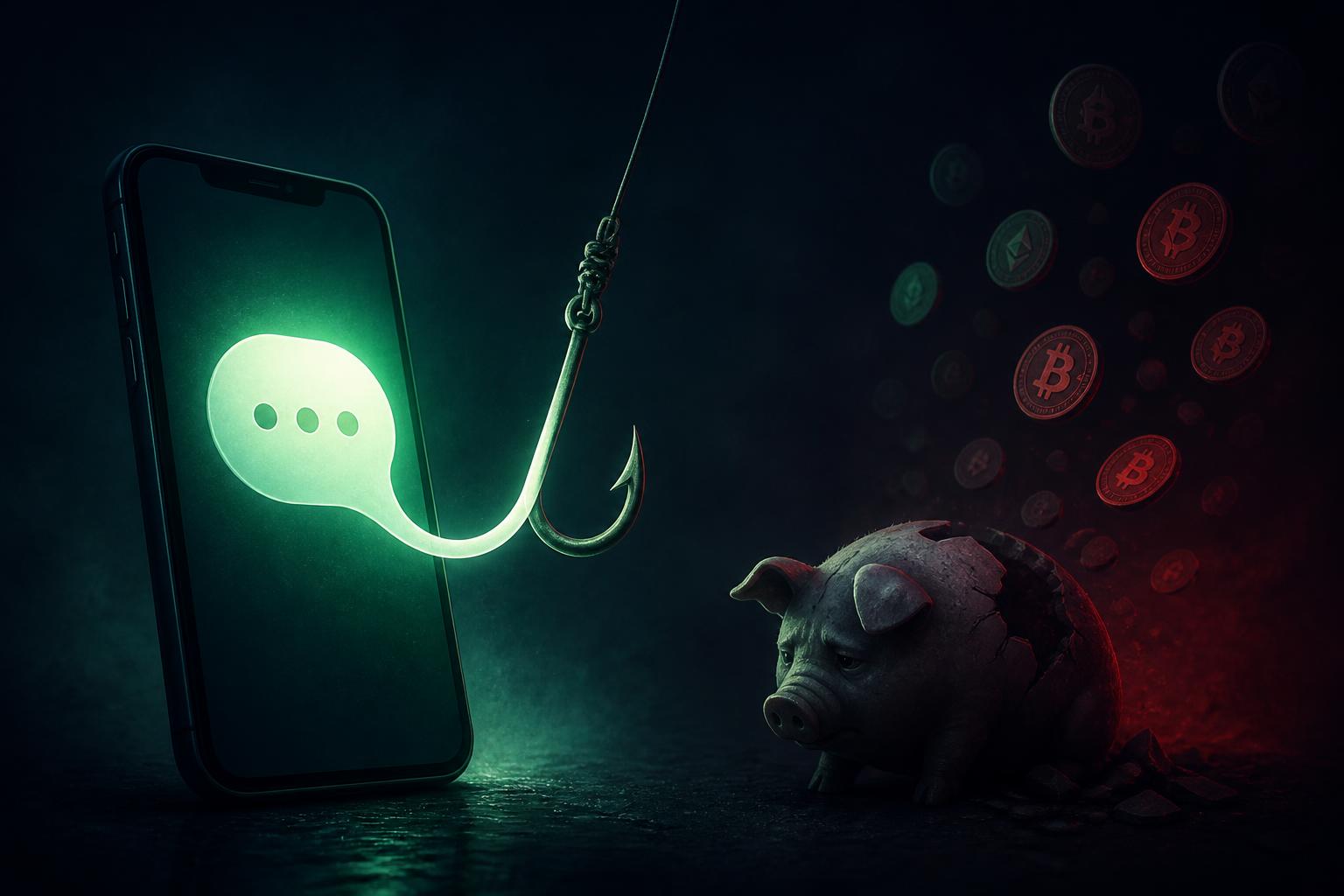
A pig butchering scam (Chinese: shā zhū pán, 杀猪盘) is a long-con investment fraud in which a scammer spends weeks or months building a fake friendship or romance with you, then steers you into a fraudulent crypto-trading platform that ultimately seizes everything you've deposited. The FBI and Interpol use the term as standard classification vocabulary.
Think you're being targeted right now?
Paste the platform URL, wallet address, or contact's handle into the free Safe Scanner. Verdict in under 5 seconds.
Open the Safe ScannerWhy is it called “pig butchering”?
The phrase is a direct translation of the Chinese shā zhū pán (杀猪盘), literally “pig-butchering plate.” It comes from organised-crime slang used inside the Southeast Asian fraud compounds in Cambodia, Myanmar, and Laos where these scams are industrialised. Internal scripts refer to the victim as the “pig”, the months of relationship-building as “fattening”, and the final extraction as the “slaughter.”
The 5-stage script
- 1
Stage 1 — The opener (week 1)
An unsolicited 'wrong number' text, a LinkedIn DM, an Instagram or Tinder match, or a friendly WhatsApp message. The scammer pretends to have texted you by accident, apologises warmly, and keeps the chat going. The goal is not romance — it's to start a relationship of any kind.
- 2
Stage 2 — Building trust (weeks 2–4)
Daily messages. Voice notes. Photos of a luxury lifestyle. They ask about your job, family, and goals. They never mention money. This is the 'fattening' phase — translated literally from the Chinese 'shā zhū pán' (杀猪盘), meaning 'pig-butchering plate'.
- 3
Stage 3 — The introduction (weeks 4–6)
They casually mention an uncle, cousin, or mentor who taught them crypto trading. They show fake account screenshots with five-figure profits. Eventually they offer to 'guide' you on a private trading platform — always an unregistered app or website you've never heard of.
- 4
Stage 4 — The first deposit (weeks 6–8)
You send $200–$2,000 in crypto. The dashboard shows quick gains. You're allowed to withdraw a small amount — this builds trust. Then they push you to deposit more: 'a once-in-a-lifetime VIP pool', 'a tax event', 'a margin call'.
- 5
Stage 5 — The slaughter
When you try to withdraw your full balance, the platform invents fees, taxes, or compliance holds. Every payment is met with a new demand. The 'friend' becomes hostile, then disappears. The platform vanishes. The crypto is gone — laundered through mixers within hours.
The biggest red flags
- Unsolicited 'wrong number' text or DM that turns into daily chat
- Refuses live video calls — only sends pre-recorded clips or photos
- Mentions a relative, mentor, or uncle who teaches crypto trading
- Steers you to an app or website you've never heard of
- Early withdrawals work; later ones are blocked behind 'tax' fees
- Love-bombs when you hesitate, turns hostile when you push back
What to do next
Already met someone like this online? Run the platform URL through the free Safe Scanner → You'll see if the trading site is on the global blacklist of known pig-butchering fronts.
FAQ
What does 'pig butchering scam' mean?
Pig butchering scam (Chinese: shā zhū pán, 杀猪盘, literally 'pig-butchering plate') is a long-con investment fraud where the scammer spends weeks or months building a fake friendship or romance with the victim before convincing them to invest in a fraudulent crypto-trading platform. The 'pig' is the victim, who is 'fattened' with trust and small fake profits before being 'slaughtered' for their entire savings. The FBI and Interpol adopted the term as standard fraud-classification vocabulary in 2022.
Why is it called pig butchering?
The phrase comes directly from organised-crime slang used inside the Southeast Asian fraud compounds (Cambodia, Myanmar, Laos) where these scams are industrialised. Scripts refer to the victim as the 'pig' and the months of relationship-building as 'fattening' before the final extraction — the 'slaughter'. It is a literal translation, not a metaphor invented in English.
How long does a pig-butchering scam usually last?
Four to ten weeks from first contact to first deposit is typical, but the relationship can run for six months or more before the scammer asks for money. The longer the build-up, the larger the eventual loss — the median U.S. victim in 2025 lost USD 75,000, and individual losses above USD 1 million are routine.
How is pig butchering different from a regular romance scam?
A classic romance scam asks for money directly — flights, medical bills, customs fees. Pig butchering never asks for money. It steers the victim toward a fake investment platform and lets them 'choose' to deposit. Because the victim feels in control, losses are far larger and victims are far less likely to report.
Can I get my money back after a pig-butchering scam?
Sometimes a small fraction, almost never the full amount. Crypto sent to a scam wallet is usually moved through mixers within hours. The single highest-value action is reporting the wallet address and platform to IC3.gov (US), Action Fraud (UK), or the Canadian Anti-Fraud Centre within 72 hours so law enforcement can flag the on-ramp exchange. Any 'recovery agent' who contacts you after the loss is a second-stage scammer — never pay an upfront recovery fee.
What are the biggest red flags of a pig-butchering scam?
An unsolicited 'wrong number' or DM that turns into daily chat. They refuse video calls or only send pre-recorded clips. They mention a relative who teaches crypto trading. They steer you toward an app or website you've never heard of. Early withdrawals work but later ones are blocked behind 'tax' or 'compliance' fees. They love-bomb when you hesitate and become hostile when you push back.
Learn to spot these yourself — free money-laundering & crypto-tracing course
The same tracing and red-flag skills investigators use on crypto and money-movement cases — taught free, at your own pace, with a verifiable certificate at the end.
Start the free courseDon't stop at reading — check the thing you're worried about
Knowing the pattern helps. Running the check takes 15 seconds and is free.
Related scam-safety guides
- How to report a pig-butchering scam
IC3, FTC, international routes, and evidence.
- Report pig-butchering scams (all routes)
Full reporting playbook and evidence templates.
- How to spot a crypto scam
12 red flags, ordered by frequency.
- How to report a crypto scam
IC3, exchange freeze requests, on-chain evidence.
Authoritative sources
Independent primary sources used to check and corroborate the guidance on this page.
- FBI — Romance Scams
Federal guidance on confidence and romance fraud patterns.
- US Federal Trade Commission — Romance Scam Data
Consumer guidance plus published loss statistics.
- UK Action Fraud
UK national reporting centre for fraud and cybercrime.
- Canadian Anti-Fraud Centre
Canada's central repository for fraud reports and scam alerts.


